The Same Tarot Card Keeps Appearing: What Can You Explore?
You shuffle your deck, ask a new question, and turn over a familiar card. It appeared a few days ago. Perhaps this is the third time you have seen it this week.
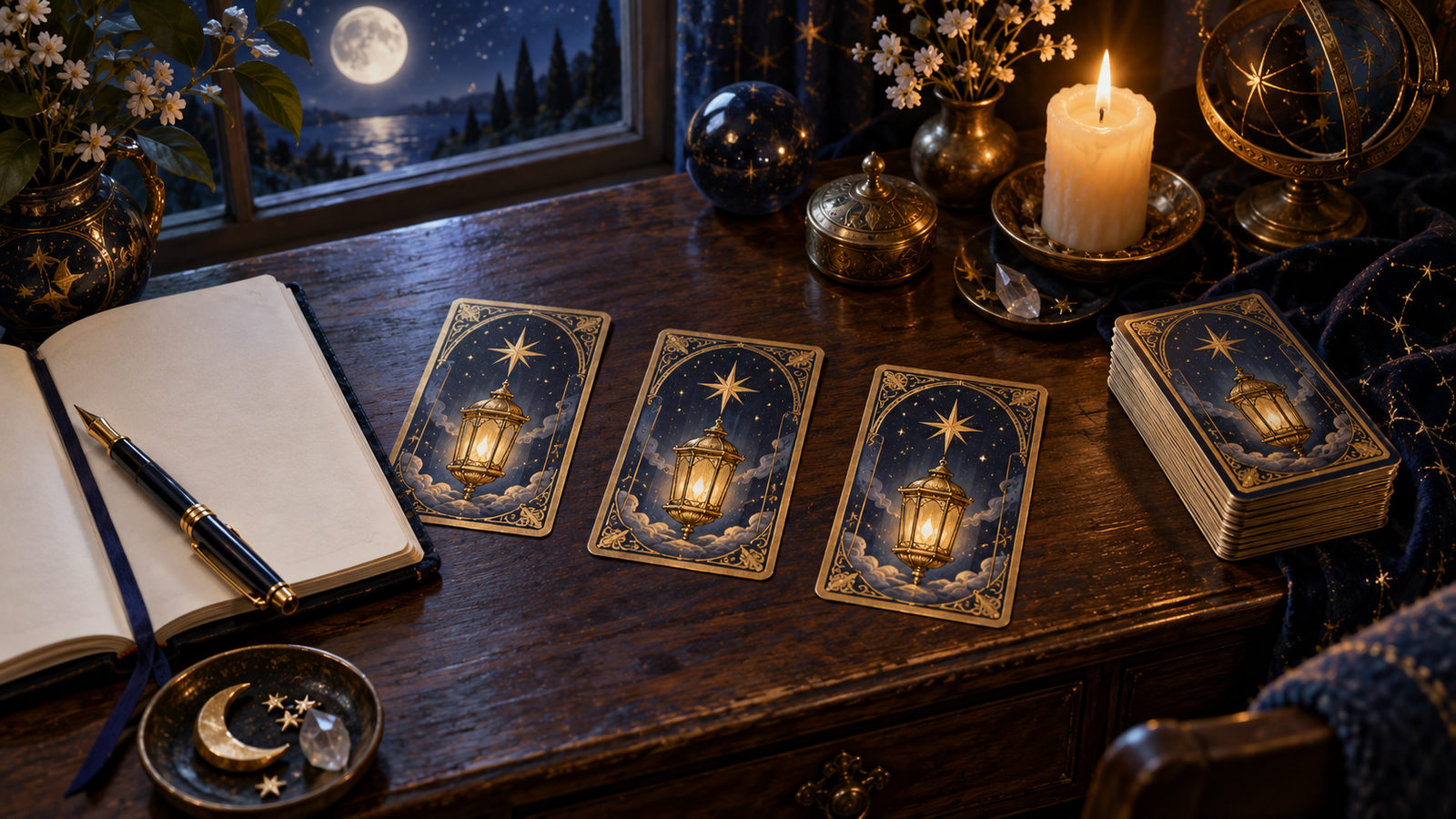
Your first thought might be: “Why this card again? Am I missing something?”
A recurring card can become an interesting subject for journaling and reflection. Repetition alone, however, does not establish that you are receiving a special message or that a particular event will happen.
Here, we approach tarot as a symbolic tool: its images can help us ask questions, notice associations, and pay closer attention to our experiences.
🔄 First, clarify what is repeating
“This card appears constantly” and “this card appeared three times across twenty readings” describe things differently.
Before interpreting the pattern, consider the circumstances:
- How many readings did you do during this period?
- How many cards were in each reading?
- Did you return every card to the deck before the next reading?
- Were you repeating the same question?
- Did the card appear in your own draws, or did you also notice it in other people’s posts?
Chance allows repetitions. If a card returns to the deck after a reading, it can appear again. A recent appearance does not mean it must now stay absent for a while.
With a physical deck, also check the practical details: how thoroughly you shuffle, whether cards stick together, or whether one has a noticeably bent edge.
👀 Why do some repetitions stand out?
A card that surprised or worried you may attract more attention when it appears again. Meanwhile, cards that feel less significant to you may be easier to forget.
It helps to record every reading during a chosen period, rather than only the appearances of one card. This gives you a fuller picture.
Record cards you notice on social media separately. Seeing someone else’s post is a different situation from drawing a card yourself.
🧩 One card, different questions
Even when the image repeats, its context can change.
For example, you might explore the Four of Swords through themes of pausing, resting, and stepping back. Its role still depends on the question and position:
| Context | Possible question for reflection |
|---|---|
| “What could support me today?” | Where could I make room for a pause? |
| An “Obstacle” position | Has a useful period of waiting gone on too long? |
| “How could I approach this conversation?” | Would thinking before replying help? |
These are possible readings, not established answers. Sometimes an association simply does not fit. You can leave it aside without searching for confirmation at all costs.
🌿 Ask what you notice
A few open questions can help you explore a recurring card:
Which detail catches my eye first?
What feeling comes up when I see this card?
What is happening in my life that reminds me of its scene?
What other interpretation could also make sense?
What does not fit this image in my actual situation?
That last question matters. It makes space for a reality that is always more complicated than a single card description.
📖 An example: the Eight of Pentacles returns
Imagine the Eight of Pentacles appears in several readings. You associate it with practice, careful work, and developing a skill.
During the first week, it reminds you that you want to draw more regularly. You decide to make a little time for practice.
Later, the same card brings up another thought: “I have been revising this piece for a long time. Is it time to finish?”
The image has stayed the same, but your question has changed. Journaling makes room for both sides: the value of consistent practice and the point at which revision starts to prevent completion.
You could try a concrete step: decide in advance what a finished piece would look like. Afterwards, assess whether that helped in practice.
✍️ What to record in your journal
An entry does not need to be long. A few lines can be enough:
| Field | What to note |
|---|---|
| Date and question | Your exact wording before the reading |
| Cards and positions | The full spread, including orientation if you use reversals |
| First response | A thought, feeling, or detail in the image |
| Possible meanings | One or two interpretations relevant to the context |
| Observable facts | What you actually know about the situation |
| A small step | Something you want to try or clarify |
| Later reflection | What proved useful and what did not fit |
Keep the original entry where possible. If your understanding changes, add a dated follow-up rather than rewriting the first interpretation. This lets you see how your thinking developed.
🌙 When the recurring card feels frightening
Death, the Tower, the Devil, or the Nine of Swords can prompt a strong reaction. Repetition does not turn them into evidence of approaching disaster.
First, name the association: “I see the Tower and feel afraid of losing stability.” Then distinguish it from the facts: “What is actually happening? What information do I have?”
You do not need to keep drawing until a reassuring card appears. If readings make you increasingly anxious, you can finish your entry, put the deck away, and return to everyday activities.
There is no obligation to solve the card immediately.
🕯️ A small practice for the week
Choose a card you would like to explore and give it a page in your journal. You can deliberately take it out of the deck for this exercise: you are selecting an image for reflection.
Write down three possible themes, then add a few specific observations during the week. For the Hermit, for example, these might be solitude, independent study, and seeking guidance.
At the end of the week, ask:
- What did this image help me notice?
- Where was the interpretation too general?
- What question would I like to explore next?
The purpose is to understand your experience more clearly. Whether the card disappears from subsequent readings is not a test of whether you have “learned its lesson”.
Which card most often catches your attention? Has its meaning for you changed over time?
Written by Kistamets